
It starts quietly. A faint ringing after a concert. A hiss you notice when the room goes silent. A tone that seems to exist only inside your head.
Most people’s first instinct is to wait. Maybe it’ll go away. Maybe it’s just fatigue. Maybe they’re imagining it.
And then weeks pass. Then months. The sound becomes part of your life in a way you didn’t agree to. You mention it to your GP. You’re told it’s common, that there’s nothing much to be done, that you just have to learn to live with it.
That advice — well-intentioned as it is — isn’t the whole story. And for the hundreds of thousands of people in Ireland living with tinnitus, it isn’t good enough.
“Learn to live with it” is not a treatment plan.
What Is Tinnitus?
Tinnitus is the perception of sound — ringing, buzzing, hissing, clicking, or roaring — in one or both ears when no external sound is present. It is a symptom, not a disease, and can be caused by noise exposure, earwax build-up, hearing loss, ear infections, certain medications, or stress. In Ireland, tinnitus affects approximately 8.7% of the population — up to 500,000 people. For most, it is an intermittent nuisance. For some, it significantly impacts sleep, concentration, and mental health.
Tinnitus is experienced differently by everyone. Some hear a high-pitched tone. Others describe it as a buzzing, whooshing, hissing, or even a pulsing beat in time with their heartbeat (pulsatile tinnitus, which deserves particularly prompt assessment). Some hear it only in quiet moments. For others, it is constant.
What it is not: imaginary, untreatable, or something you simply have to accept.
The Scale of the Problem in Ireland
| ~500,000 People in Ireland affected by tinnitus | 8.7% Prevalence rate across Ireland | 63% of GPs don’t follow routine referral criteria |
That last figure is the one that stops people in their tracks. A study of GPs in Ireland found that 63% do not follow routine criteria for onward referral of tinnitus patients — and that GPs themselves felt they needed clearer guidance and better access to audiology resources. This is not a criticism of GPs, who are under enormous pressure and dealing with an extraordinarily broad range of conditions. It is simply an honest look at why so many tinnitus patients fall through the cracks.
The result is that people who could benefit from proper assessment and management — many of them significantly — are instead sent away without a clear path forward.
Why Tinnitus Gets Dismissed — And Why That Needs to Change

There are a few reasons tinnitus tends not to get the attention it deserves in primary care settings.
First, it’s invisible. You can’t show tinnitus on a scan. You can’t measure it directly. A practitioner has to take your word for it, and in a 10-minute appointment, ‘I hear ringing sometimes’ can easily be treated as a minor complaint rather than a signal worth investigating.
Second, for a long time, the medical understanding was genuinely limited. There was no cure, limited treatment options, and the advice to ‘manage and adapt’ was based on a real lack of alternatives.
But that’s changing. Rapidly.
The last decade has seen significant advances in tinnitus management — from sound therapy and hearing aids with built-in tinnitus programmes, to bimodal neuromodulation devices developed right here in Ireland. The field has moved on. The advice hasn’t always kept pace.
Irish Innovation
The Lenire device — developed in Ireland — uses mild electrical pulses to the tongue combined with sound through headphones to reduce tinnitus symptoms. In clinical trials, 86.2% of participants reported improvement after 12 weeks, with 80.1% maintaining those improvements 12 months later. It is now available in Dublin through specialist audiology clinics.
What Causes Tinnitus? (And Why the Cause Matters)
Understanding what’s driving your tinnitus matters because different causes have different solutions. Tinnitus is a symptom — and treating the underlying cause is often the most effective approach.
Common causes include:
• Noise-induced hearing loss — the most common cause, from years of loud environments or a single loud event • Earwax build-up — a simple blockage can cause or significantly worsen tinnitus, and clearing it often resolves the symptom entirely • Age-related hearing loss (presbycusis) • Ear infections or fluid in the middle ear • Eustachian tube dysfunction • Certain medications (including some antibiotics, diuretics, and NSAIDs at high doses) • Stress and anxiety — which don’t cause tinnitus but dramatically affect how it’s perceived • Temporomandibular joint (jaw) issues • Rarely, a condition requiring further investigation (which is why new or changing tinnitus should always be assessed)
This is why a proper assessment matters. If your tinnitus is being caused by earwax, clearing it might solve the problem in 30 minutes. If it’s linked to hearing loss, hearing aids with tinnitus management features may transform your quality of life. If it’s stress-related, targeted sound therapy and CBT approaches can significantly reduce its impact. None of these paths open up until someone has actually assessed you properly.
What Can Actually Be Done About Tinnitus?
Despite what you may have been told, there are real, evidence-based options available. Not a cure — tinnitus research has not yet produced one — but genuinely effective management strategies that make a meaningful difference to how tinnitus affects your life.
- Rule out the simple stuff first
Earwax build-up, ear infections, and eustachian tube dysfunction can all cause or worsen tinnitus. A proper ear examination should always be the first step. If the issue is mechanical, resolving it can reduce or eliminate the tinnitus. - Hearing assessment
Many tinnitus sufferers have an element of hearing loss they’re not fully aware of. A hearing test is a crucial part of any tinnitus assessment. - Hearing aids with tinnitus programmes
Modern hearing aids include sophisticated tinnitus management features — background sound generation, personalised sound therapy, and apps that allow real-time adjustment. For people with associated hearing loss, these can be genuinely life-changing. - Sound therapy
Using background sound — white noise, nature sounds, or personalised audio — to reduce the contrast between the tinnitus and silence. The brain habituates to the tinnitus more easily when there’s ambient sound present. - Cognitive Behavioural Therapy (CBT)
Not because tinnitus is ‘in your head’, but because how we respond to tinnitus — the distress, the hyperawareness, the anxiety it creates — is something CBT is very well equipped to address. This has strong evidence behind it. - Bimodal neuromodulation
The Lenire device (developed in Ireland) combines auditory and tongue stimulation to reduce tinnitus intensity. Clinical trials showed significant, lasting improvement in the majority of participants.
Where ClearEar Comes In

At ClearEar, we don’t just clear earwax and send people on their way. We take ear health seriously as a whole — and tinnitus is very much part of that.
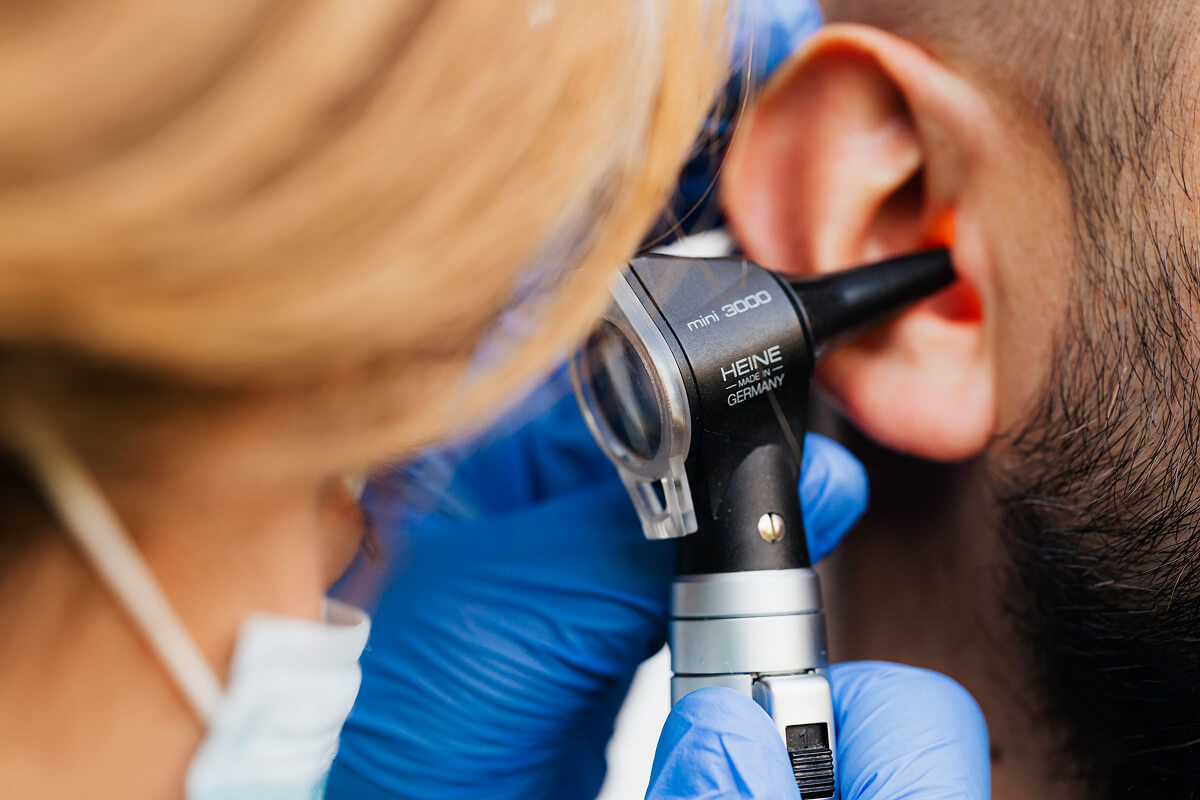
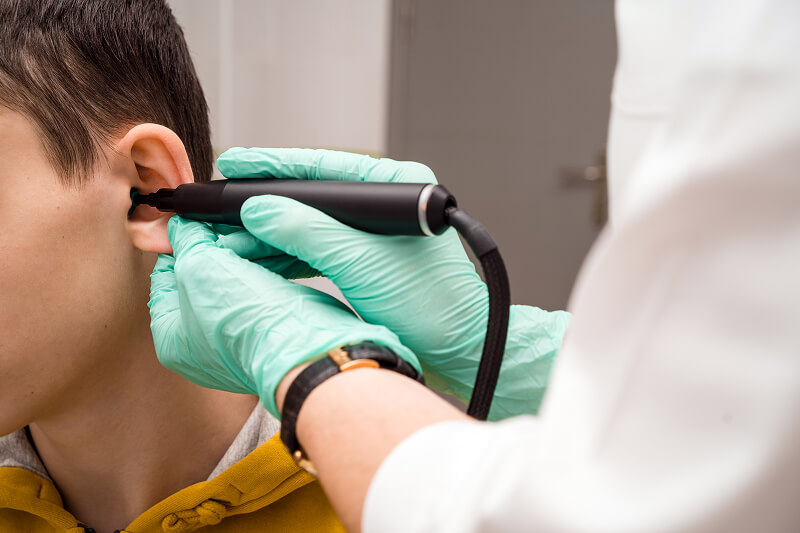
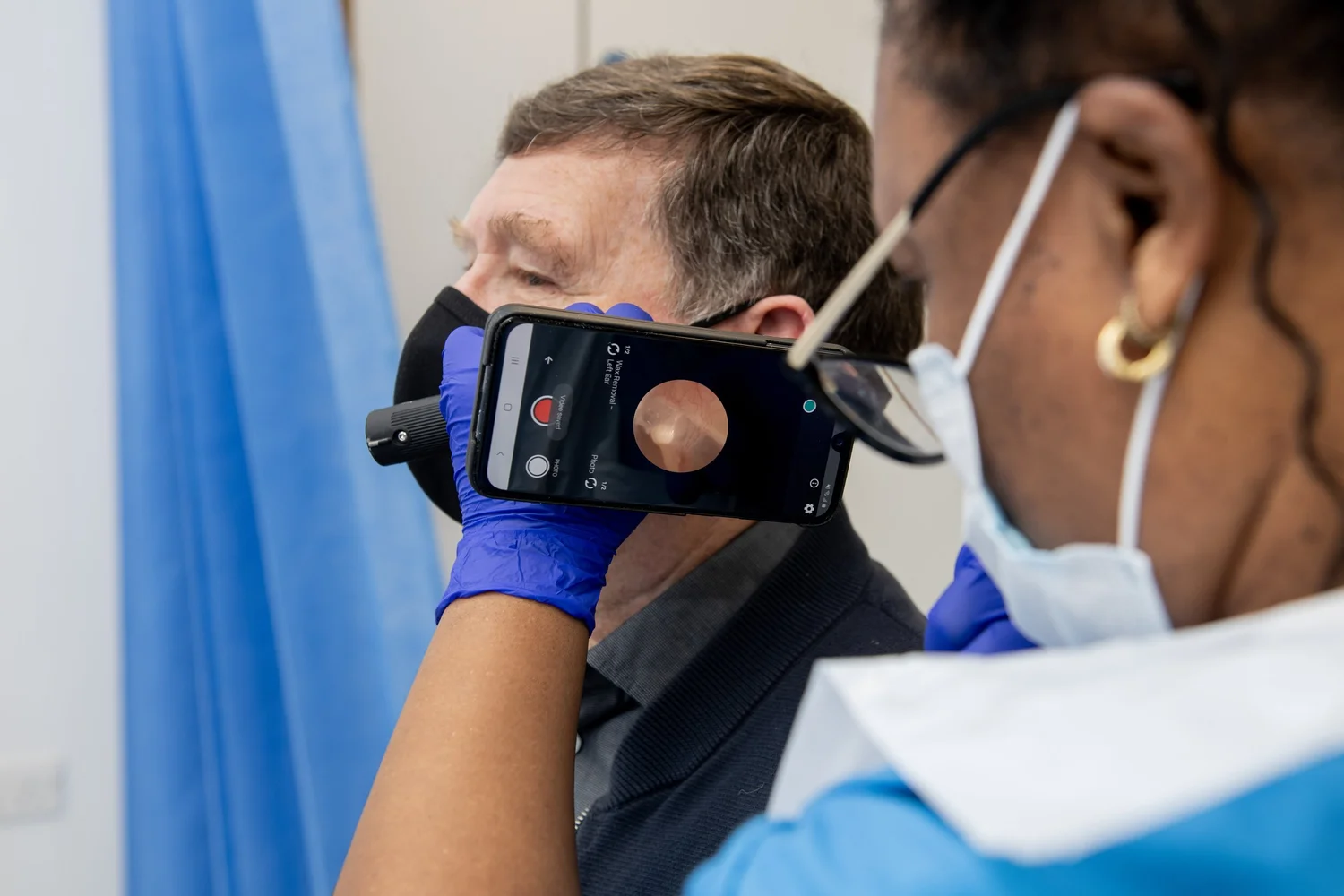
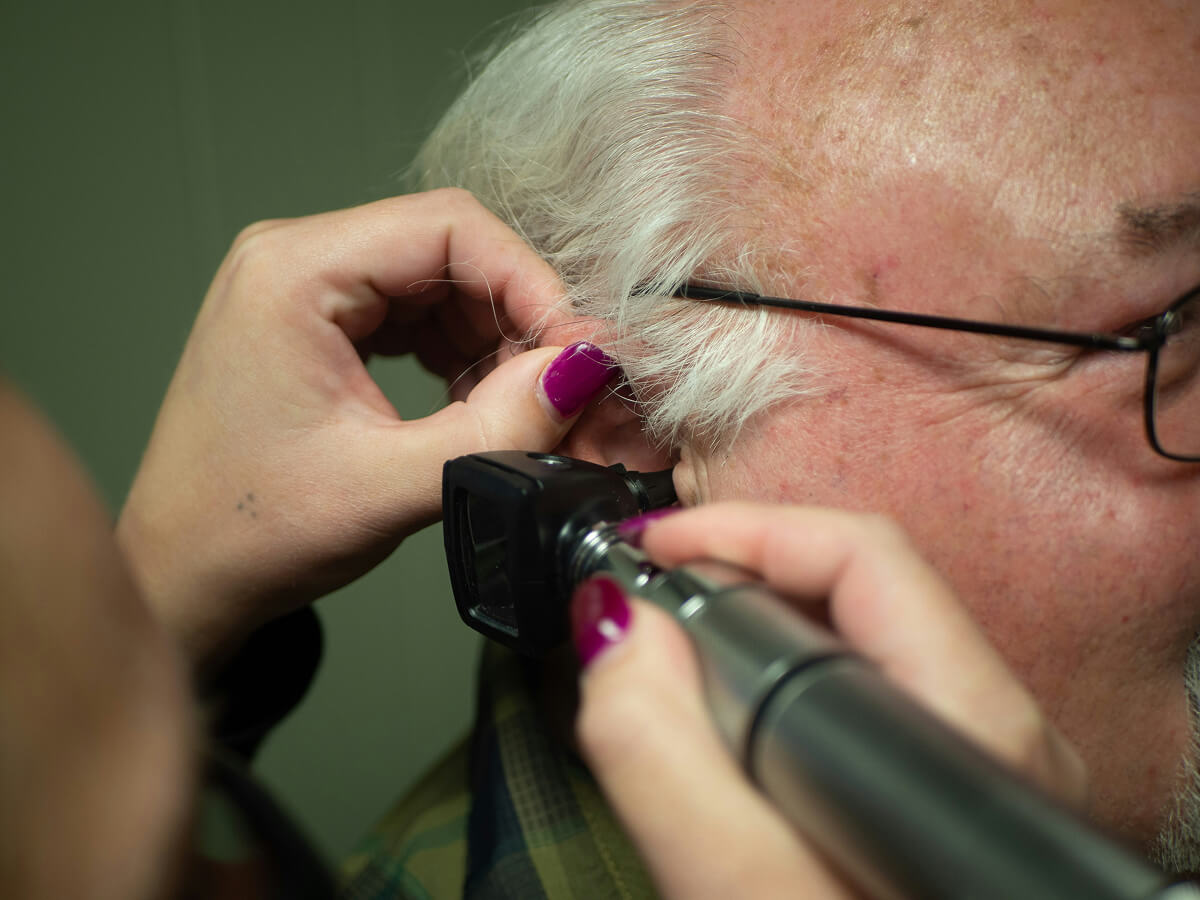
If you come to us with tinnitus, we’ll start with a thorough ear examination to rule out any mechanical causes. We’ll assess your hearing. We’ll take a full history of when it started, what it sounds like, what makes it better or worse, and how it’s affecting your daily life.
From there, we can point you toward the right next steps — whether that’s a straightforward earwax removal that might resolve things entirely, a hearing assessment and discussion of hearing aids, or a referral to a tinnitus specialist for more targeted management.
What we won’t do is tell you to just get on with it.
Things That Help in the Meantime
While you’re getting properly assessed, a few things are genuinely useful:
• Avoid silence — background sound (a fan, radio, nature sounds app) reduces the perceived loudness of tinnitus • Protect your hearing — use earplugs at loud events; further noise damage will worsen tinnitus • Limit caffeine and alcohol — both can temporarily increase tinnitus intensity for some people • Manage stress — anxiety and tinnitus have a reinforcing relationship; techniques that reduce one often help the other • Sleep with background sound — tinnitus tends to be most noticeable and distressing at night; a sound machine helps • Don’t obsessively monitor it — the more attention you pay to the sound, the louder it seems. Distraction is genuinely therapeutic
Get Your Ears Properly Assessed — Don’t Wait
If you’re living with tinnitus and haven’t had a proper ear examination and hearing assessment,
that’s the place to start. Book with ClearEar — no GP referral needed.
clearear.ie
FAQ — Tinnitus in Ireland
Q: What does tinnitus sound like?
Tinnitus sounds different for everyone. The most common descriptions are ringing, buzzing, hissing, clicking, whooshing, or a constant tone. Some people experience pulsatile tinnitus — a rhythmic sound in time with the heartbeat.
Q: Is tinnitus permanent?
Not always. Tinnitus caused by temporary factors — earwax, ear infections, medication side effects, or short-term noise exposure — often resolves when the cause is addressed. Chronic tinnitus linked to hearing loss is typically long-term, but can be significantly managed.
Q: Can earwax cause tinnitus?
Yes. Earwax build-up is one of the most common and easily treatable causes of tinnitus. Clearing the blockage — ideally with microsuction — often reduces or eliminates the symptom entirely.
Q: What should I do if my GP dismisses my tinnitus?
Ask for a referral to audiology or an ENT specialist. Alternatively, you can book directly with a private ear care clinic like ClearEar — no GP referral required. A proper ear examination and hearing assessment is the appropriate starting point for any new or worsening tinnitus.
Q: Is there a cure for tinnitus?
There is currently no universal cure for tinnitus. However, there are well-evidenced management strategies — including sound therapy, hearing aids with tinnitus programmes, CBT, and bimodal neuromodulation devices like Lenire — that significantly reduce its impact on quality of life.
Q: Does stress cause tinnitus?
Stress does not directly cause tinnitus, but it significantly affects how it is perceived. High stress levels make tinnitus more intrusive and distressing. Managing stress — through exercise, mindfulness, CBT, or other approaches — often reduces the subjective impact of tinnitus.
Q: When should I be worried about tinnitus?
See a professional promptly if: tinnitus is in one ear only; it started suddenly; it is pulsatile (beats in time with your heart); it is accompanied by hearing loss, dizziness, or balance problems; or it has significantly worsened recently. These patterns can sometimes indicate a condition requiring further investigation.
ClearEar is a Dublin-based ear care clinic offering ENT specialist consultations, microsuction earwax removal, hearing assessments, and in-home ear care. Same-day and same-week appointments available. clearear.ie